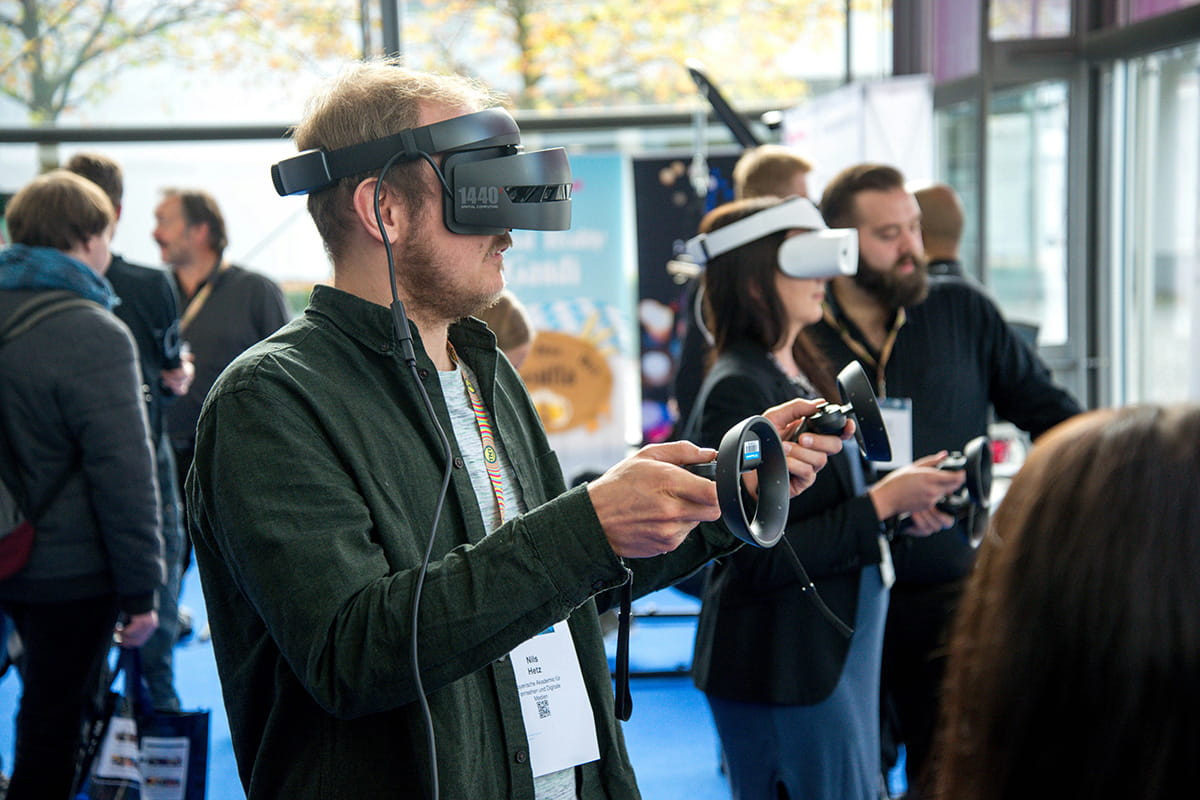
In a new paper published in the Proceedings of the National Academy of Sciences, a team of authors from around the globe argue that VR has the potential to revolutionalise behavioural science.
Virtual reality is a proverbial holy grail for researchers, allowing studies to immerse participants in hyper-realistic environments and control that environment down to the most minute detail. However, as with many new technologies, excitement is outpacing rigour. With the constant advances in VR technology and lowering of prices, the field risks becoming a proverbial wild west with methodological protocols varying widely across disciplines.
The members of the Openverse - a team of VR researchers dispersed across the globe and representing a wide range of disciplines - see this as an opportunity. In this landmark paper, they outline a future vision for VR research that puts open science practices and technological accessibility at its core. Through an interactive checklist (available at VR Protocols, researchers from any field in the behavioral sciences can ensure that the running and reporting of their VR study aligns with the most recent version of the protocols.
Virtual reality (VR) research is increasingly important given the technology’s widespread adoption and the distinctive ways in which users engage with it compared with other technologies. However, the field faces significant challenges related to reporting, transparency, and non-standardised practices, which may limit the generalisability of VR research findings. Therefore, this paper aims to establish key protocols for researchers to implement in order to improve the rigour, transparency, and generalisability of VR research.Dr Kirsten Cowan, a Senior Lecturer in Marketing, and author of the paper
The Openverse argues that these protocols won’t just help maintain standards, they could also help address one of the major challenges facing behavioural science: reproducibility. Over the past couple of decades, the behavioural sciences have been rocked by research showing low reproducibility, i.e., using the same study design and measures, scholars cannot replicate past research findings. VR may offer a solution to this.
Due to its unique ability to fully immerse participants in a virtual environment, VR is not only highly realistic, it is also highly repeatable. VR studies have been conducted all over the world, even on the International Space Station, with participants’ experiences being exactly the same regardless of location. This publication is takes the first step towards making VR research more accessible to everyone.

Kirsten Cowan is our Senior Lecturer in Marketing.