How we built an AI banking companion and won a hackathon in one day
The setup: One day, one shot
Picture this: it's 8:30am on a Saturday. You're in the University of Edinburgh Business School, armed with a laptop, a coffee, and absolutely no idea what challenge you're about to face.
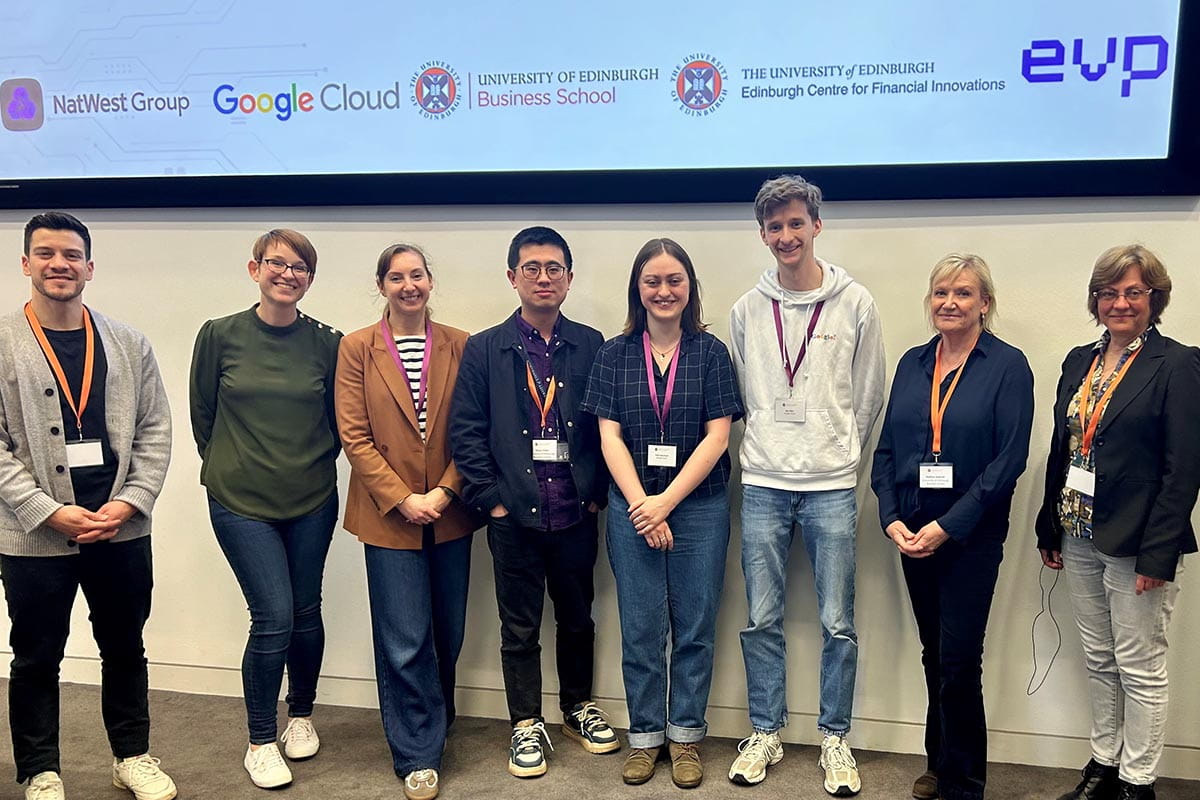
That was the opening scene of NextGenHack: NatWest Group and Google Cloud's hackathon, hosted by the Edinburgh Centre for Financial Innovation (ECFI). The premise was simple and slightly terrifying: pick one of three real-world banking challenges, be placed into an interdisciplinary team of strangers, and build something worth pitching to a panel of NatWest and Google industry experts, all before 5:30pm.
The three challenge areas were fraud prevention, ethical and inclusive banking, and AI-powered customer experiences. We chose the last one. By the end of the day, we'd built Finny AI, and somehow, we'd won.
Here's how it happened.
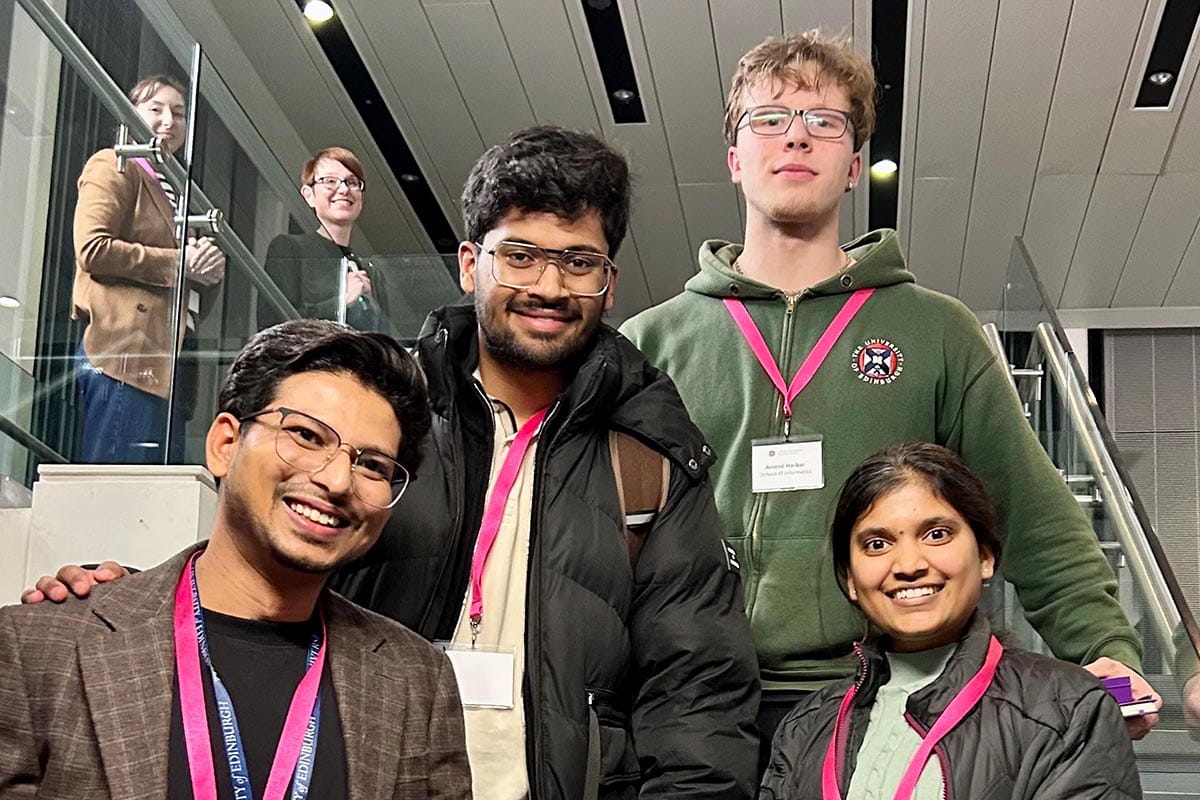
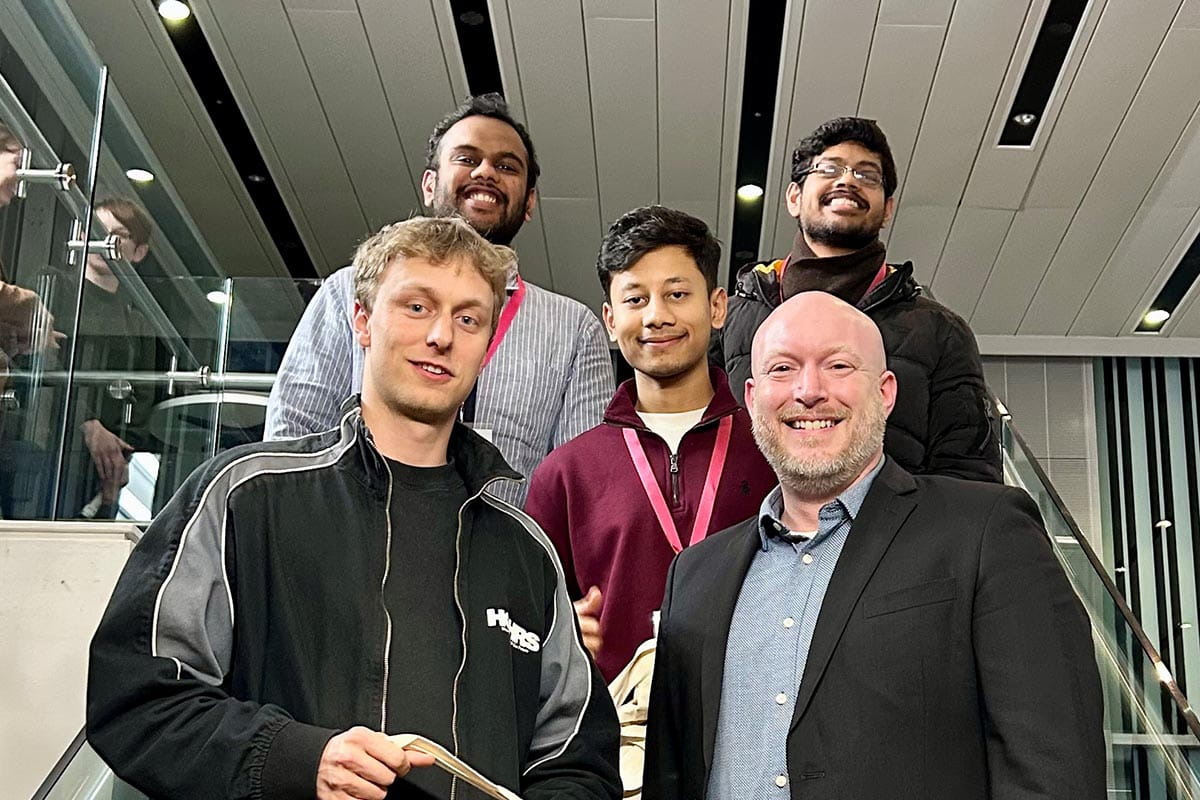
The team: Five strangers, one very good day
We didn't know each other walking in. What we did have was a mix of backgrounds that, in retrospect, was almost absurdly well-suited to the task.
- Abhi is pursuing an MSc in Entrepreneurship & Innovation at Edinburgh, backed by a few years of software engineering experience at a B2B SaaS startup. He helped refine the problem/solution fit with the whole team and developed the MVP.
- Saurabh is pursuing an MSc in Artificial Intelligence at Edinburgh, with few years of software engineering experience at a unicorn fintech startup. He assisted in identifying the gaps in existing banking software solutions, narrowing down on the target audience and the customer retention issues that banks face in that demographic and finally developing the MVP.
- Sidhanth is an MSc Business Analytics student at Edinburgh, helped to bridge the gap between technical thinking and business strategy. He supported the team turn caffeine, code and chaos into something coherent.
- Ian is an MBA candidate at Edinburgh, a two-time founder with a background in defence and cybersecurity. His focus was on time and project management, problem scope, the customer journey, and commercialisation within the NatWest ecosystem.
- Lukas studies Climate Change Finance and Investment at Edinburgh, with an undergraduate background in Economics, making him arguably the least technical person in the room. But that outside perspective proved its worth: he focused on framing, messaging and idea development, and helped deliver the final pitch.
Interdisciplinary teams are a nice idea in theory. In practice, they can be chaotic, mismatched working styles, competing ideas, too many cooks.
Ours wasn't like that.
More on why in a moment.
The problem: TikTok told me to take my savings out of the bank
The AI-powered banking experience challenge had a lot of angles. We could have gone broad. Instead, we went specific.
The insight that focused us: millions of young people are getting their financial advice from TikTok. The hashtag #financialadvice has over 93,000 videos, some helpful, most questionable, and occasionally outright dangerous. Meanwhile, the actual tools sitting inside their banking apps go largely unused, buried under menus nobody opens.
The result? Generic, one-size-fits-all advice leads to poor savings habits. Subscription creep silently drains accounts. And when someone wants to save for something real, a trip to Paris, say, they have no idea where to start, what to cut, or how long it'll take.
That became our framing: "Paris trip: £500. Where do I get the money from? What expenses aren't essential? How much can I save with that?"
A real question. A relatable question. And one that existing banking tools weren't actually answering.
The idea: Finny AI: Cora's younger brother
We didn't want to build another budgeting app. We wanted to build something that lived inside NatWest's existing environment and made the features people already had actually work for them.
The idea that clicked: an AI companion, Finny, that proactively keeps you on top of your finances without requiring you to spend hours in your banking app. (Because, let's be honest, banking apps are boring. Nobody opens them for fun.)
Finny does three things:
- Predictive cash flow: It forecasts your financial picture for the coming months based on your spending history, the moths coming (summer vs winter) and specific data that your bank has about your habits, so you can see what's coming before it arrives.
- Goal-aware saving pots: It helps you set savings goals tied to real life events (holidays, birthdays, big purchases) and dynamically adjusts its recommendations as your spending changes.
- Proactive AI nudges: It flags unnecessary spending, spots forgotten subscriptions, and alerts you before you overspend, not after.
We pitched it as "Cora's younger brother". Cora is NatWest's existing AI assistant. Finny is what happens when you give that assistant a proper view of your finances and the ability to actually act on them.
The approach: Focused, fast, and ruthlessly simple
Phase 1: Brainstorm (but only for an hour)
A lot of hackathon teams spend half their day generating ideas. We gave ourselves sixty minutes. It was enough to identify the problem clearly, align on a direction, and kill the ideas that weren't going anywhere, without anyone getting precious about their suggestions.
That last part mattered. Nobody was attached to their ideas. If something wasn't right, it got dropped. No egos, no politics. We were surprisingly direct with each other from the start, which made everything faster.
Phase 2: Split and build
Once we had the concept, we divided into two tracks:
Development team got to work building an MVP, a mobile-first web app, integrating Google's Gemini AI, and deploying it on Google Cloud Run. The stack was chosen quickly and deliberately: tools that were powerful enough to do the job, fast enough to deploy in half a day, and native to the Google Cloud ecosystem the hackathon was built around. [Note from the dev side: it was intense. But it worked.]
Product & pitch team took the concept and stress-tested it, refining the user journey, sharpening the positioning, and building the presentation. Crucially, we kept opening our own banking apps throughout the day, checking what already existed and making sure Finny genuinely slotted into the real product rather than reimagining the whole thing from scratch.
The two tracks came back together multiple times. This rhythm, split to focus, reconvene to align, kept us productive without losing coherence. By the afternoon, both sides were so locked in that when NatWest and Google experts stopped by our room, we'd have a quick five-minute conversation and then dive back in.
What the experts added
Throughout the day, industry mentors from NatWest and Google rotated through the teams. In the morning, these conversations were genuinely valuable, they gave us a sharper picture of what NatWest already had, what was technically feasible, and where the real gaps were. That early grounding shaped the whole project. The integration with existing NatWest infrastructure wasn't an afterthought; it was a design principle from the start.
What set us apart
Looking back, a few things seem to have made the difference:
Speed of focus. We didn't try to solve everything. We identified one clear problem, built one coherent solution, and didn't let scope creep in. While other teams were still debating features at 2pm, we were refining a working product.
Genuine integration. Finny wasn't a standalone app pitched as a bolt-on. It was designed to live inside NatWest's existing infrastructure, using their data, fitting their UI patterns, extending what Cora already does. The judges noticed.
The team dynamic. This is the one that still surprises us. Five people who'd never worked together, producing something coherent and polished in eight hours. No conflicts. No dead weight. Everyone contributing across all areas, not just their own lane. We talked about it afterwards (before we even knew we'd won) and all felt the same thing: something unusually good had happened in that room. We still don't entirely know why it worked so well. Maybe the interdisciplinary mix meant nobody felt territorial. Maybe the time pressure made hierarchy irrelevant. Whatever it was, we'd bottle it if we could.
The result
At 17:30, we pitched to the judging panel: NatWest industry experts, Google representatives, and our University Professors. The live demo, a working, deployed app, scannable via QR code, did a lot of the talking.
We won.
The prize includes an invite to meet NatWest Group's leadership team at an Insight Event at their Edinburgh office. Not bad for a Saturday.
What's next
We're already thinking about what Finny could become with more time: full Open Banking integration for a household-wide view of finances, or advanced forecasting for life events and small business owners. Whether that happens remains to be seen, but the team is meeting again, and we're already looking at what other hackathons might be worth tackling together.
One thing's certain: none of us are opening our banking apps the same way anymore.
NextGenHack was organised by the University of Edinburgh Business School's Edinburgh Centre for Financial Innovation (ECFI), in partnership with NatWest Group, Google Cloud, and Edinburgh Venture Point.