In a world full of fish, it pays to think like a shark.
A small footnote on a PowerPoint slide; yet somehow, it still resonates.
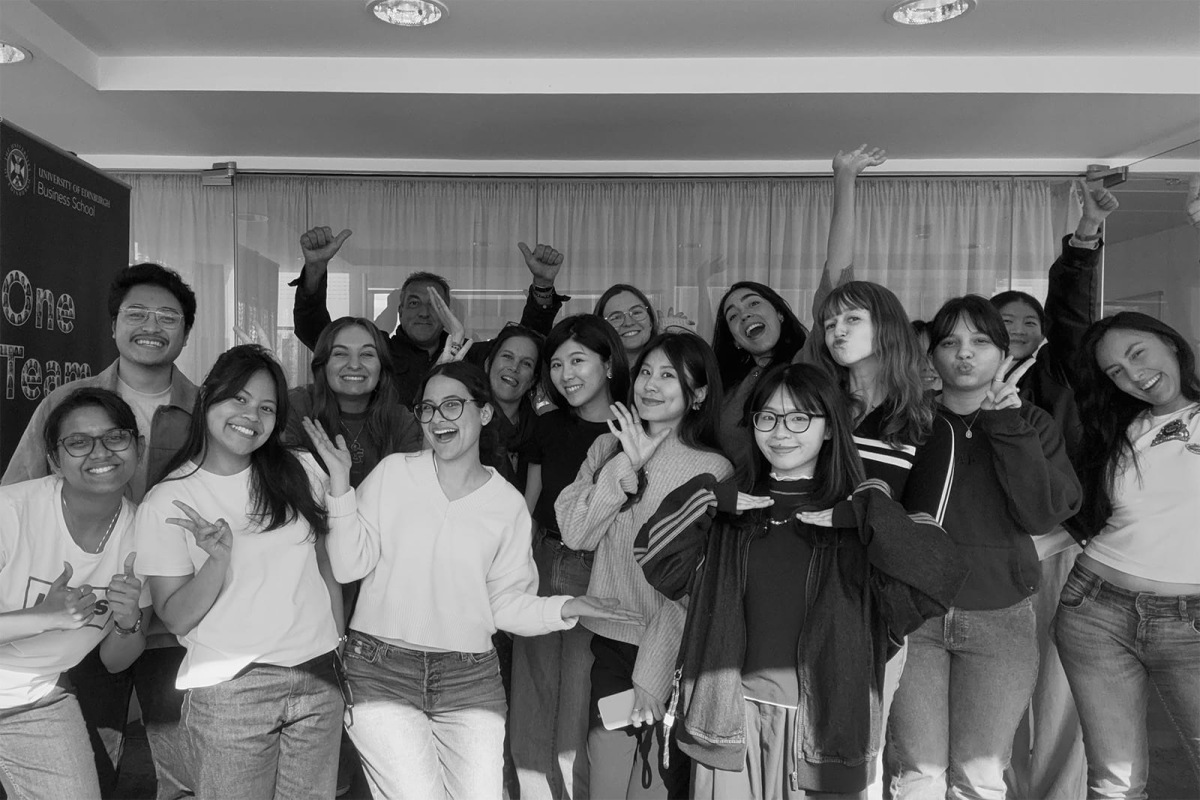
After a busy year of taught classes, assignments, professional training sessions, guest lectures and group projects, Spring is finally here! In the months ahead we will be working closely with our supervisors on our individual Dissertation projects, but also looking for work and planning what comes after we complete our MSc at the University of Edinburgh Business School. And what better way to kick off this new chapter of our programme than a week packed with workshops? Enter #EmployabilityWeek.
Day 1: Budgeting for Marketing with Tim Hamill
This was the session I was looking forward to most, and it didn't disappoint.
Budgeting was one of my biggest struggles during group projects, so Tim's opening statement hit close to home: marketers often avoid numbers because they don't know what to measure. But whether it's pounds or page clicks, numbers are non-negotiable in marketing.
Marketing is a strategic function, not just a creative one, and this session drove that. Key takeaways included understanding the difference between market share and pound share, maintaining customer lifetime value, using buddy metrics instead one, and applying Pareto analysis for decision-making. Just as important was how to present data: rather than dumping everything on a slide, marketers need to extract insight from information and translate it into something actionable. Spot the pattern, identify the trend, take the action.
Unexpectedly, this session also put emphasis on cross-department collaboration. Other departments (e.g., finance) aren't the enemy. It's about speaking their language and showing that marketing results can be measured in terms that matter to the whole business.
Day 2: Digital Marketing Strategy with Steve Kemish
Day two shifted focus to the digital landscape and how marketers can leverage technology without being seduced by it.
Steve's core message was refreshingly grounded: before chasing the latest AI model, get back to basics. Know your audience, define your objectives, and don't overkill with tech. Customers use technology to save money; businesses use it to understand behaviour. The tools should serve the strategy, not the other way around.
Trust is increasingly a deciding factor in customer choices, which is why Steve updated the classic AIDA framework (Awareness, Interest, Desire, Action) to AIDCA, adding Conviction as a crucial step. To earn that conviction, content needs to connect with what people already care about. As Steve illustrated with a simple example: how differently he and his daughter perceive the same phone – the same product can mean entirely different things to different people. Good content accounts for that. Translating how a product works for different audiences is a skill that sets marketers apart.
The bigger takeaway from this session: no matter how advanced technology becomes, the human touch remains essential. AI can scale, but it can't replace the creativity and judgement that humans bring. The future belongs to marketers who can integrate both.
Day 3: CV and LinkedIn Development with Jo McLaren
On day three we changed gears: from marketing products or services to marketing ourselves.
As someone about to re-enter the job market, the recruitment nerves are real. These sessions, organised by the Student Development Team, helped ease that transition. The through-line, as Jo framed it, was simple: be thoughtful. About where you apply, what you include, and who you connect with. Not unlike Tim's budgeting advice, actually.
Your CV is your marketing document. It's the hook, the pitch, the answer to ‘why hire me’? Jo's standout tip: the top third of your first page is a prime selling page. Use it to show your skill, scale, and impact. A tailored CV that speaks directly to each role will always outperform a generic one.
LinkedIn, meanwhile, is your free personal brand asset. It's where you network and build visibility intentionally. That means personalised connection requests, not blank ones. We even had a group activity exploring LinkedIn's features and how to make the most of them. A chance to exchange peer feedback, taking notes on what stood out and what could be stronger. Jo also introduced the TIARA framework (Trends, Insights, Advice, Resources, Assignments) as a guide for information interviews. A practical tool I'll definitely be putting to use.
Day 4: Industry Insights and Career Readiness Panel with Erica Hungerford, Graeme Davies and Svein Clouston
Facilitated by fellow MSc Marketing students Kaitlyn and Maria, this panel was one of the most engaging sessions of the week. Hearing directly from industry practitioners - who have their finger on the pulse - really helped give us an insider’s view of what it means to work in Marketing today - with insights from both client and agency roles.
Three pieces of advice stood out for me. Svein cut straight to it: the campaigns we create are for customers, not clients. Never lose sight of that ("don't be a marketing moron," as he put it). Graeme spoke to the value of global networking and cultural fluency. Something that made me glad I took the International Marketing Strategy course! Erica brought it back to importance of measuring impact: use the right metrics, and define what success looks like before the campaign even begins.
Collectively, their advice pointed in one direction: be resilient, be systematic, and be distinct. Explore widely, lean into your network, find your place, and figure out what makes you you.
Day 5: Networking for Your Career with Katerina Chatziioannou-Faulds and Vishal Kumar
We wrapped up our career-readiness week with a Networking training session. I have to admit networking has never come naturally to me. So, this session was exactly what I needed.
Katerina and Vishal reframed it completely: networking is like dating! It's all about building genuine relationships, not collecting contacts. Start small, find common ground, and let conversations develop naturally. They even ran a live networking demo to show just how approachable it can be when you drop the pressure. It worked like a charm!
Just as the footnote said, it does pay to think like a shark. Not about being the sharpest in the room, but about knowing yourself, your strengths, your audience, your direction.
Always leverage the tools available: the latest AI model, your networks, and your experiences, but do it with purpose. Even the group projects and late-night study sessions count. A huge thank you to Victoria Rodner as our Programme Director and the Student Development Team for putting this together. It was exactly the push needed heading into dissertation season and the path to my next role.