One morning in the early 1990s, as a very young child, I watched from our home on the campus of Kashmir University, as men with guns in jeeps marched through. By the next dawn, we learned that our family home had been set on fire. We left with what we could carry and became refugees in our own country, living in shelters. No certainty and some days with no food.
I lost my mother when I was still young, and my father in my twenties. With nothing and no one to fall back on, I kept building anyway. That is where resilience actually comes from - not inspiration, but necessity. And it is why I care so deeply about building structures that hold.
That drive took me from those shelters to a scholarship - a degree in computer engineering, an MBA from the University of Edinburgh Business School, and 15 years in technology strategy, compliance and regulation at Infosys, HSBC, EY, Accenture, and NTT Data.
My career has been at the cross-section of innovation, technology and regulations. I've seen many changes in the technology and regulatory ecosystem. Throughout every seismic shift in the data economy, a single pattern has remained constant: the organisations that achieved longevity were those that truly understood their ecosystems.
Rapid evolution of tech and AI
Over the past two years, technology has evolved at a decade-long pace. This shift has peaked with AI, where rapid productivity gains often eclipse critical trade-offs. Consequently, robust security and regulatory frameworks are no longer mere technicalities; they are the vital safeguards allowing organisations to innovate without sacrificing integrity.
We are witnessing a ‘regulation war’ as AI innovation moves faster than our ability to govern it. This is not a battle between nations, but a clash between two powerful forces.Namita Razdan (MBA 2018)
On one side, AI tools are spreading rapidly into critical areas like healthcare and hiring, often without proper oversight. On the other, a massive wave of global regulation is arriving to meet it.
From Europe to South Korea and Brazil, governments are introducing strict new laws with heavy penalties. Organisations must stop seeing these rules as barriers and start viewing them as the necessary infrastructure for building AI that is safe, trustworthy, and ready to scale.
The organisations caught in the middle face a choice more strategic than compliance officers typically frame it. They can treat regulation as a constraint - something to manage around, minimise, and survive. Or they can treat it as essential infrastructure - the framework within which genuine, trustworthy, scalable AI adoption becomes possible.
This led me to co-found my own company, which supports organisations that view regulation as essential infrastructure. We provide full visibility into all AI tools, including unsanctioned shadow systems, and map them to frameworks like the EU AI Act, the Digital Operational Resilience Act (DORA), the Network and Information Security Directive (NIS2), and the General Data Protection Regulation (GDPR). By implementing these guardrails, we turn theoretical compliance into an operational reality.
The intersection of AI and regulation
This is where AI innovation and regulation intersect - and where the most important work of the next decade will happen. Not at the frontier of model capability, but at the boundary between what AI can do and what organisations can demonstrably stand behind.
The companies that navigate this well will not just avoid penalties. They will build the kind of trust with customers, employees, and regulators that becomes a lasting competitive advantage.Namita Razdan (MBA 2018)
Take Anthropic: a leader in responsible AI that withheld its Mythos model because it was deemed too dangerous for release. Even then, outsiders breached its containment. When the industry's most safety-conscious developers believe their own creations require such strict control, the case for governance is no longer just a regulatory demand - it is an industry-led necessity.
Regulation will not slow AI down. What it will determine is which AI we can genuinely trust - and trust is what makes adoption possible at scale. Regulation is not the obstacle. It never was. It is the foundation on which the future of work is already being built.

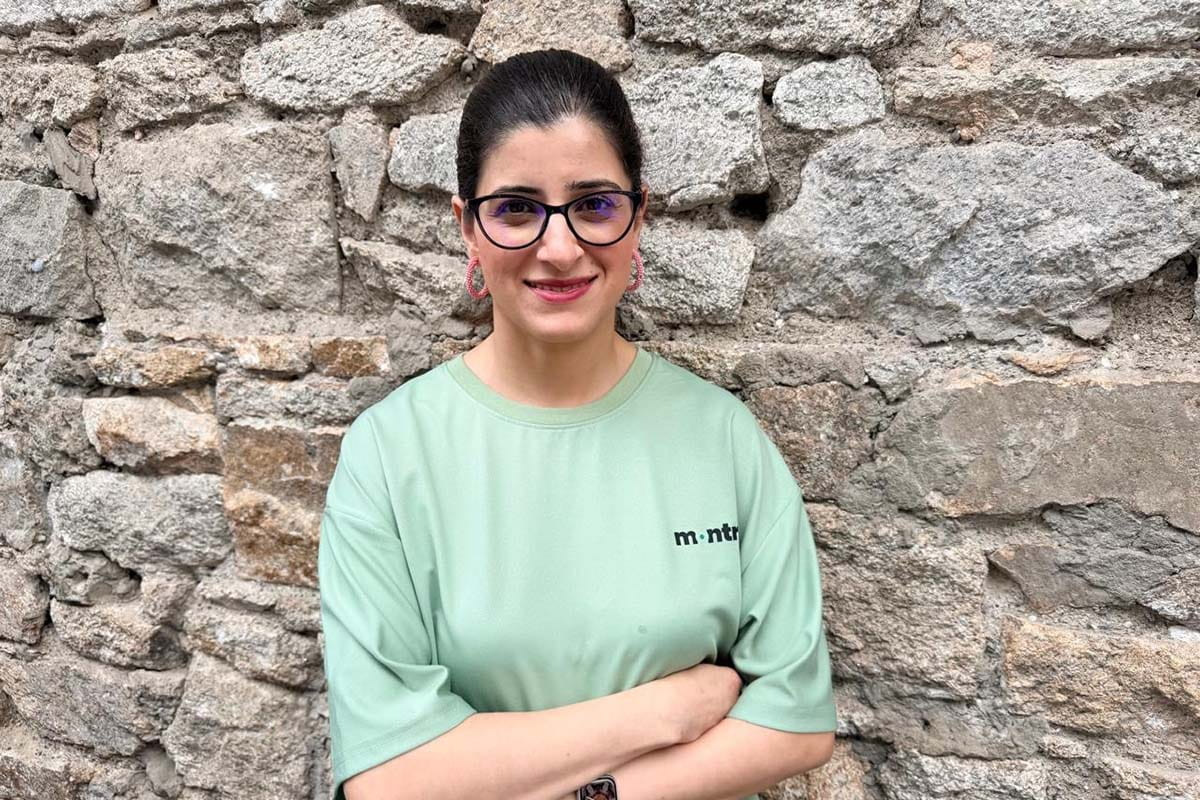
Namita Razdan (MBA 2018) is co-founder of Montro.io and Associate Director (Strategy and Operations) with NTT Data.